Podcast Episode

From compliance to dignity: inclusive storytelling with Jamaal Digital Davis
In this episode of This is HCD, guest host Hyun Song kicks off her special series on inclusive design and accessibility, in conversation with Jamaal Digital Davis, a senior inclusive designer at Yahoo and founder of Inclusive Tech Club.
Guest
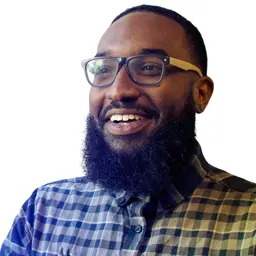
Jamaal Digital Davis
Inclusive Designer, Accessibility,
Pittsburgh, Pennsylvania, , United States
I bridge human-centered design with ethical AI development to create experiences that are fair, accessible, and equitable for everyone. I deliver solutions that resonate with diverse communities while driving sustainable growth.
View Directory Profile →Guest

Hyun Song
service designer, design researcher
Australia, australia
Service designer and customer researcher currently working on digital transformation projects in the public sector.
View Directory Profile →Show Notes
In this episode of This is HCD, guest host Hyun Song kicks off her special series on inclusive design and accessibility, in conversation with Jamaal Digital Davis, a senior inclusive designer at Yahoo and founder of Inclusive Tech Club.
Jamaal's core idea is simple: compliance is the floor, not the ceiling. In this episode, we talk about what inclusive storytelling really means, how to tell stories that don't flatten people into stereotypes, and what changes, for better and worse, when generative AI becomes part of how those stories get made.
Jamaal is also a filmmaker. His short film BEADS, a four-minute Afrofuturist drama made with generative AI, is the phoenix project he describes in the episode. You can watch the 60-second teaser and see the visuals at beadsfilm.com, and enter your email there to get a link to the full film.
Links
jamaal.digital
LinkedIn: linkedin.com/in/jamaal-davis
Newsletter (subscribe on LinkedIn):
Subscribe here
Short film BEADS: beadsfilm.com
This is HCD is hosted by Gerry Scullion. This special series on inclusive design and accessibility is guest hosted by Hyun Song.
Watch on YouTube
Transcript
Hyun (00:00)
Hello and welcome everyone to a special episode of This Is HCD. My name is Hyun Song and I'm a service designer based in Sydney, Australia. I'll be your guest host for this special series on inclusive and equitable human-centered design. My pronouns are she/her, and my visual description is I'm a woman with long dark hair, wearing a black jumper and headphones, and behind me is my very unexciting living room wall with some framed prints.
Before we get started, I'd like to acknowledge that I'm joining you today from the lands of the Gadigal people. I pay my respects to Elders past and present, and extend that respect to any and all Aboriginal and Torres Strait Islander listeners of this podcast. Today I'm joined by a very special person, Jamaal Digital Davis, a senior inclusive designer at Yahoo, whose work brings together accessibility, inclusive design, technology ethics, and storytelling.
Jamaal helps teams think more deeply about who technology is really serving, who it may be leaving behind, and how design can become a force for greater access, dignity, and participation. He's also the founder of Inclusive Tech Club, where he explores how technology can become more accessible, ethical, and useful for more people. Alongside his product and digital work,
Jamaal experiments with AI-assisted media, including music and filmmaking, to explore complex issues like bias, exclusion, and the future of technology. Today we'll be talking about inclusive storytelling, what it means to tell stories that don't flatten people into stereotypes, how storytelling can help teams understand accessibility beyond compliance, and what changes when generative AI becomes part of how stories are created.
Jamaal, it's such a pleasure to have you here.
Jamaal (02:04)
Excited to be here, too excited for the conversation.
Hyun (02:07)
Can you tell us how you've found your way into inclusive design, accessibility and storytelling?
Jamaal (02:15)
Yeah, yeah. So I started with in with human centred design probably a little bit after I graduated college. I went to school majoring inside of Philosophy. Couldn't really find a job with that. And I was working at the co op at the time and one of the cooks there, he finished his Masters program. He went and worked at the library, he told me I should come join him. So I joined him at the library. didn't know what exactly I was doing, but they put me inside the community
engagement department. Well from there our job was to go out to the actual communities that we were serving that maybe couldn't physically get to the library, could be because they was incarcerated, maybe they didn't have the transportation, or maybe they were elders and they couldn't leave the home or for any other reason. But we would go there and ask them what the library could do, how the library could serve them. And while I was doing that, I started to read a lot about human centred design and different types of design thinking. I started to apply a lot of that work
and that methodology towards the actual communities I was in service of for my time at the library. So I got to work with a program called Literacy Unlocked. And it really focused in on people who were actually inside of the prison system or currently incarcerated in their families about how we could assist them inside the library. So we did a lot of interviews. I got to go into prisons a lot, do a lot of focus groups. That was like my introduction inside of design thinking from like a community perspective.
And creating tolerable spaces that are equitable for people from different backgrounds and things of that nature. So that program was pretty successful and we did really good. And that went into a partnership program. I got to work with the Goodwill of Southwestern Pennsylvania and Google with trying to teach people to have digital skill sets from underprivileged backgrounds. And then at the Goodwill of South Western Southwestern Pennsylvania, they have a
really big diverse population that they serve. And a lot of people they'll have some type of disability or some type of impairment. And one of the things that I got to do when I was running the partnership program was to actually help design a maker space for people with assisted technology. So we got to look at like do we have like different types of switch boards in there? Do we have like desks that moved up and down 'cause I'm cause some of the users was inside of wheelchairs. That was like my first like real introduction into
fully accessible technologies. I've always been a user of accessible technologies, especially different types of screen readers and different types of Dragon Natural Speaking stuff. That was like me seeing like other people use it. I was like, okay, this could be a real promising career for things that I could at least look forward to. And then this led to a number of other opportunities, such as like working for the county here and seeing how we are building different types of AI tools.
And also making sure all of our websites was actually WCAG compliant. So that was like that. And I got to match that with a little bit of data too, because we were doing so much of the BAGEL the BAGEL analysis. That was my introduction to storytelling, which I've always kind of carried with me. I've I've seen pretty early on that there would be good researchers and they could find stuff and do good interviews and focus groups and even surveys, but they would have a hard time trying to communicate that story.
and create a narrative arc out of it that could get stakeholders buy-in So I really would try to put in a lot of time into that and like what story you want to tell. Who are we telling it to? Because if I'm gonna tell a story to a room full of designers versus a room full of product people, I'm gonna shift the narrative a little bit just so I can understand what do they want out of it to kinda build that up. But that's like a quick overview introduction of it. I've gotten to work for public and private companies and I got to do a lot of work for the federal government as well
as looking at the visa programs and things of that nature. Which I think really broadened me as an inclusive designer because up to that point I really looked at inclusive design from accessibility and also somewhat of economic lens, but doing a lot of that governmental work, I also got to look at it from a cross cultural perspective. So like even colours could mean different things in different cultures, which is also really important with the story you're telling.
Hyun (06:30)
Yeah. Yeah. And
given this background, like how would you describe what inclusive storytelling looks like?
Jamaal (06:39)
Yeah, I think it's I think it's a little bit more complicated and I'm still trying to figure it out. So I'm not gonna act like I know it all. but I think to tell a story that is fully inclusive, you have to understand the cultural perspective of the audience and the cultural perspective of the of the subject matters that you're talking to. So like say we're moving away from more traditional story processes, so like
at least inside of the West, in America, where I'm raised, we're a big fan of Joseph Campbell's storytelling and you see out a lot inside the product work too. So you start to talk a lot about like the Hero's Journey and those are good stories. Like I love Hero's Journey stories. I grew up on them. But I think if you're looking at a cultural storytelling perspective, you have to kind of shift shift that narrative from just one particular person coming in and saving things and looking at what are the systematic issues that are causing the problem.
So it gets more into system thinking and design thinking. And instead of those as being one answer, there could be multiple answers. And how do people inside of the community have come up with these answers, how have they tested those answers? And also try to figure out ways that we can not isolate people who maybe who haven't been a part of the narrative. And this isn't and this isn't just for something for minorities. Like I was I was looking at some data not too long ago, and it was saying, like, I think in 2025 they did a study, like less than like
seven percent of Amer- movies coming coming out of Hollywood actually have a character with like some type of disabilities or something like that. Not the exact number. It's definitely under ten percent of like that is a representation of someone with actual disability or impairment. So like some some some communities aren't even able to get inside of media. So like what does that look like? And if they are inside media, what type of roles do they play? Are they playing like the water boy? And there's nothing wrong with those movies. But I just think it's a
different narrative. So to tell fully inclusive stories, I think you have to be you have to be very humble and willing to change and willing to apologize. I don't think you can just stick back and say, like, this is the story, you like it. If the community says it's not a representation of them, you have to listen, try to figure out why, and then work with them to figure it out. And I've done that a lot. I've definitely fought to tell some stories to stakeholders and then once we get the data and we share it back out with the team. They're like, this isn't what I want it. Like this isn't at all.
So like what do you do then? You listen and you go back, you know?
Hyun (09:06)
Yeah. And that's that that iterative approach, right? Like that's the core of human centered design.
Can you tell me more about that experience of when you have worked with communities
to work and create a story together rather than responding to feedback after you've created that product.
Jamaal (09:28)
Yeah, yeah. So when I was at when I was at the county here and I was running a data team focusing on human centred design, they were trying to roll out a predictive model for families inside the county. And one of the things there was a lot of discussion about should the model be opt in, should it be opt out. And we actually went to the community, we kind of displayed to them because they were already inside these programs, that were mainly focusing in on under served communities.
of what these things are, how they get inside of there, in like very plain language, and also listening to did they want to be opted in, do they want to be opted out? And in that in for that particular scenario, I was pretty sure I was like, they're gonna want to be opt out. But they actually were not against it as long as the program actually provided what they wanted them to do. So I think another big piece of this is to shift when you're wrong. So another time, I think this might be even better example.
When I was also at that same county one of the last big parts actually did is they had a predictive housing model tool here. So this tool kind of shows who actually gets housing for people who are currently un are currently unhoused and who actually remain on the waiting list. So the savings that we was working for as human centred designers there was that they was moving away from having people call on the phone and do a long phone screening and moving towards
using our integrative data warehouse set to look at the data and just give people a score based off of the social work number, well the social number. And then if they get into the program, they didn't get the program. I was like when I started this research, I was like almost 100% so I was like, no one's gonna want this, no one's gonna want to data share. And then we did a number of we did a number of focus groups and and interviews at homeless shelters throughout the city. So I got to go in the homeless shelters, I brought them some usually some form of breakfast every day.
I sat around there for a couple hours and talked to people and we had a little diagram. We would just talk to them about the current way that the model worked and the future way that we worked, having pass scores. And most of the people there, they were completely fine with having the model work. The only thing that they had the biggest problem was, and we actually had to go back and look at this too, was they didn't want their data being shared. So they was fine with the model giving a predictive score and then moving into the housing. But the moment that if you're sharing data with the actual police force,
Or maybe other types of human services that they don't want their data shared with, that's where the problem came in at. And we we listened to that and we went back and made sure there were proper guardrails around there too. So I think trying to you can come to a community with some form of solution. Like I'm not against like coming with some form of solution, but then also figuring out like, okay, this is what we got, how can we make this better? And they tell you like this is this is what it needs to be, then we can politic, 'cause there's always politics about one of the things
that we can do, one of the things we can't do with inside of the given restraints. Those are just two examples, but I've I've done it a lot, I failed a lot and some those are usually some of the happier ones.
Hyun (12:31)
It's always nice to have happy examples too, hey, 'cause it's our work is really hard. but then when you do have those like wins, it's it's always like really exciting.
and I think you were talking earlier about when you're speaking to different teams, how have you used storytelling as a tool to help teams and different stakeholders understand accessibility beyond just meeting compliance?
Jamaal (13:03)
Yeah, this is a it's a million dollar question right here. So I think I think I like to I find to give people to understand that compliance is the floor not the ceiling. So like compliance is like the bare minimum we can do, but we can also create really good human experiences on top of that for people that have disabilities or any type of impairment as well. And we can also expand it out to people who are also neurodivergent too.
And what do those experiences look like. So once we get a understanding that this is what you have to do from a legal sense, and sometimes it takes a little bit longer to than than you would like to get that understanding because people have to be educated on the laws inside of your your current country and also the laws inside of whatever country they are operating in. if you're inside the EU, they recently launched the E the EU Act. So that definitely shifted the accessibility lands the accessibility landscape over this year.
So I I definitely think like having up to date laws and knowing that's really good too. But also looking at it from the ROI perspective is something that can be very helpful as well. So like for products people, I usually find that I'm focusing on the laws and mitigating risks. So like you won't be sued if this happens. Your product could actually, you know, might have to have like any type of legislation from like a legal side if you're inside of a state or a country that has very strict guidelines. So we're mitigating risks.
But then too, we also can look at it as a growth segment. And I think this is very important to people to understand. When you actually make your product more accessible, you're actually adding more users to that product. And when you make your product un by actually unaccessible or in or inaccessible, you make, you're losing that potential market.
And there's been studies done that actually says that once a keyboard user a sc keyboard user or a screen reader user runs into an accessibility issue more than one or two times, they're not coming back. So you're actually losing that particular audience because now you're getting into a legal issue and a human rights issue. It's kinda like if you go into any type of restaurant or any type of brick and mortar business.
And they just won't serve you because of the way you walk or because of something that you don't fit their ideal user type. So I I think when we talk about it like that, I like to focus it more on a human rights and a human dignity level, where you do have to come if you're talking to product teams with some type of hard data around numbers. If you can get numbers around the aging of the user base, that can be really helpful helpful too. As people tend to age, they tend to get some type of disability or impairment.
Even if it's a loss of sight or a loss or a minimization of hearing, they're still having some type of impairment that just usually happens as we naturally get older. And that's something too I find always get the people to understand is like these are natural things in life. So like if your grandma can't use your product, is it really accessible? You know what I'm saying? So that's something that to really think about. Especially if it's a product that you know they're gonna be using. So like a lot of the early lawsuits that we started to see in 2024 and in 2023
especially during the height of those of those later pandemic years that when it really started going up, it was actually due to a lot of a lot of e-commerce companies like Target and things like of that nature who were off- offering essential services but people couldn't access them for numerous reasons. So like that's one piece. And also understanding like at least in the United States, the last time I looked like I think like almost well over forty percent of males over the age of sixty five has some form of colorblindness.
So you have to be aware of that too when you're looking at colours and things of that nature that you are building in- inaccessible products. and far as the storytelling piece goes, no one wants to build inaccessible products. So it's not a hard story to tell, to sell at. The story is when it conflicts with with like launch dates or KPIs or things they have to meet. That's when the story becomes like, do we do this now or do we go back and fix it? Yeah. And
That's when you have to help them prioritize. Like these are things that get us to that baseline level. But there's a lot of things we can do to get way beyond that. And that's what I said. We start with the s we start with the floor, but accessibility is the ceiling, because now we can design for so many different types of users that a lot of people who are building these technologies just don't even think about what they're doing.
Hyun (17:35)
Yeah. and that's that's kind of it, isn't it? Like the the crux of effective storytelling is knowing how to speak the language of your stakeholders. So if their language is data, metrics, KPIs,
yeah using hard data
it just makes it so much more impactful.
Jamaal (18:00)
Yeah. I think the hard data, so again, there's a time and place for hard data, and a time and place for soft data. I know I was just talking about accessibility and inclusion right now, but like I think this is a skill that all designers need because of as roles start to get more blurry with different types of large language models that are coming out, you're going to start to be expected to have some some baseline of business thinking.
Yeah. So like can you go in there and look at the size of the market and you look at projections from this quarter? And I think when we talk about telling those different unique stories, you can use like these large language models to actually put in maybe some of that soft data. But then also if you have access to hard data, or some of the databases we have access to, we can feed it to kind of pull out some of those projections, help you start to shift some of that storytelling with it too.
So definitely utilize these models to help you speak to your particular target audience and your particular stakeholders, but keep it based off of like conversations you had, things you know. Let's, don't be like, yo, I'm a PM at a company because you're gonna get very generic answers. But you do have like if you talk to your stakeholders and they say we want to we want to we want to en-, we want to raise the user base, we want to raise different types of engagement met- metrics, now you can match that to a story that usually the company or the organization has already bought into.
Now that gets you more buy-in than trying to come in and hard and harden up with something where people don't really want it.
Hyun (19:28)
Yeah, yeah. in in your experience, I guess, where have you found that teams often maybe unintentionally exclude people?
Jamaal (19:41)
I mean there's there's hundreds of examples.
Hyun (19:44)
Yeah.
Jamaal (19:47)
Um yeah, I don't, I mean there's so many, I think especially in the world with AI, like there's been studies done that have said that Black sounding male names when you run it through AI models for jobs and employment, they tend to not even get callbacks or get ranked super well versus compared to like more Caucasian sounding names. So like I think that's just one piece of it. I think also like one of the things that like
makes it difficult and I think this kind of goes with some ... people don't know what they don't know. And I personally I don't believe that people have negative intentions. I don't believe people are like, I'm building this product that's for people who look like me. But if no one's on the team or there's no one else in the room to say who doesn't look like us, yeah, then that already leads to natural exclusion. It's just it's like exclusion by default to me. So if you're on a team of all White male people
building a product, then you're not gonna think about what does this look like when a female get into this. So another example of this we even if if we even leave technology is like the size of dummies for when you put them inside the car for the actual car crashes it was only measured by men. So anytime women drivers would get in a car crash, they would get hurt way more than men until they actually resize the dummies.
So like these are just things that people don't even think about. Same thing with phones. There's also been a number of examples of this from a racial perspective. So like if you use a soap, different types of soap dispensers, they don't pick up Black people's skin. So now you had to like remove this... Yeah, yeah, yeah, yeah. Because it used it like, a lot of those soap dispensers, they was framed on the same exact technology that like camera technology was framed on, which also did not pick up any type of darker skin until I believe I don't remember the exact date, but there was a company.
And they wanted to they wanted to show their like brown furnace would pass. So then they readjusted the camera angles and and the aperture inside the camera to show what darker skin represents. Like you see that a lot inside of AI too. So like inside of Dr. Joy's recent, like recent work the last couple of years with the Algorithmic Justice League. She was trying to create a mirror that would give her affirmations as a Black
woman to have a positive day, it would not pick her up as a person until she put on a white, an all white mask and then they would train that. But like the the fact that, like don't want to say these are intentional things. These are systematic issues that make their way into code. So like I don't really I don't really think
any of these things can be changed until we start to change them from a systematic level. But one of the first things we can do is probably make sure we have we have diverse people inside of these rooms. These could be people with disabilities, it could be people from different communities. But that's the only way someone's gonna speak up and say that doesn't work for me. Or so you or they can show you like it doesn't work for me. Everyone in the room will say I never thought about that. Because like what's the first thing we do? We want to test it with whoever's in the room, and that's the people who built it.
Hyun (22:47)
Yeah, that's a really great I think that's an excellent point. Yeah.
and we started going into the AI territory, the the big elephant in the room. so let's let's go there. You use a lot of AI for your creative work as well. So what what does using AI now change about storytelling and representation and fairness?
Jamaal (23:16)
Yeah, I think it's definitely uh, changed the game far as like design and multimedia. So I think I think it's you can do a lot more with I don't want to say a lot less 'cause you're still buying tokens, but with not as many physical resources. and I think if you're someone who maybe wanted to create a short film or make some music and you
didn't have the financial means to maybe go and get a studio or like hire a cameraman and crews and boom so you can kind of do some of those things now yourself with the media. But I do I do think using these large language models can generate that, but also can lead to a lot of I don't want to say less storytelling, but like it can lead to a lot of like AI slop.
So it can lead to a lot of very generic things that don't really represent the world. And I think sometimes as as storytellers who use AI, who don't use AI, I've seen so many movies where I've seen they try to tell someone's story, I'm like, they completely whitewashed that culture and it's down to nothing. So like AI can generate that quite a bit if you're not like pushing back and prompting it and and and saying I I I want to I I want to see Black doctors. I want to see women doctors.
I I type in a prompt and I say, give me an image of doctors and they're all all White guys. I don't want that. I want to see doctors of diversity. So you have to like push it. And I think by doing that, if you're doing it properly, it also can help you become more creative too. And it helps you spot that biases too, if you have trained that eye to do that. So if you start to examine some of these images that are coming out,
ask for a person with a disability, it gives me someone inside of a a um, wheelchair looking sad and lonely in the corridor. They're not like around people, they're not smiling, you know what I mean? And I've been to I've been to accessibility conferences and I've worked with people in accessibility. They smile. You know what I'm saying? They have feelings, they have joy. And I just don't think these models get that currently. But it can speed up along a lot of the storytelling. It can't help people
create narratives that maybe they didn't think about. And also, I also think it can be used as a empathy building tool. A lot of the promises we was talked about with virtual reality, I think those are still there. But I think if you're using like AI generated media to create videos or songs or things like that, you can literally take a different culture and put it in. Like think about now, you can really create a song and put it in ten different languages
if you want to. The same thing with video. So I think it has a lot of ups a lot of upside for storytelling and and access. But you have to be mindful of the data it's giving you and also push back on it. And I just think that's a rule for all type of AI uses. Like if you're using these tools, still think, you know, I just don't want the tool to do it all for me. And that's and I know that's what we've been promised. Yeah. But I think if you do that then you're just gonna get some slop. You have to push back to
get something really good.
Hyun (26:17)
Yeah, absolutely. It's it's as good as the data we we put in it, but then it's also the output is as good as as what we review and make sure that it is representing fairly and minimizing bias. because again, like it's it's an iter iterative process.
I don't just get the thing I want with one prompt. I need to go back and forth and yeah, just kind of work with it to revise.
but yeah, and I guess what sorts of stories do you like to tell using these different AI tools? Can you give us some examples of what you've been working on? 'Cause I've I've had a preview, but maybe the audience hasn't.
Jamaal (27:03)
Yeah, yeah. Yeah, yeah, yeah. I've used AI tools to tell quite some interesting stories. I was a super big fan of Sora before it got shut down, but um I've definitely supported other AI tools since then. But I've used it to do like different types of public service, public service announcements about different things that I care about, like aging populations, people who aren't being represented as much. So you can use it for that way too.
But you can also use it for more creative endeavors. I've made a four minute short film with it just doing prompts. And then even did some of the music using ElevenLabs and things of that nature that kind of goes through a decent four-minute short film with different types of sites and then have a phoenix in there. So you can pretty much like I could never like get a camera crew and be like, I'm gonna go film a phoenix. But I can like prompt the AI to be like, give me a phoenix. You what mean? And then a couple of sites like, okay, I like that one. So that's that that's what I mean when I was talking about earlier about like
the creative thing. You know, it would cost me so much money to get like a bunch of people who do 3D animations and stop motion to create a phoenix, but now I can just prompt and it can give me a video of a phoenix. So I've used it for that. I've also used a number of different types of AIs to create a album I just I recently just put out called Design for the Voiceless. And that kind of tells a story using rap and narrative about
what technology is currently, where it could potentially go. And also just highlight some of the things that I think we need to have conversations about. So I think it could also be a creative storytelling piece too from from like yourself too as well. But yeah, you can definitely do a lot with it. And I've even used it quite a bit inside of stakeholder analysis and also creating short snippets of what maybe users are saying and also showing it to stakeholders in real time.
And even using it to help create a lot more of those longer form share outs of data that could be maybe took a long time to you could put you could put data into what is it, Google Notebook and you can get videos, podcasts, all these things out in a matter of minutes that you can share out with your stakeholders for multimedia. So yeah, I think it's a really powerful tool to kinda meet people where they are, but just be mindful that
it can dehumanize people. That's why we have to have those checks. And I think you said something that was really awesome too. It's like we're working with the AI. I don't think some people understand that yet. It's like it's not just like the AI's giving me output. Instead of me saying like give me five emails to actually respond to this person I don't like, you can say what are what are some emotionally intelligent responses I can do right now that would not hurt or hinder this current relationship?
So now you're pulling on a different way of thinking about it than just that. But yeah, you can tell so many stories with these types of tools, especially the video models that are currently out. So I definitely recommend everyone plays around with them. And you can also tell stories about yourself. Like you can take old family photos and edit them, put yourself in a different time zone. You can do a lot.
Hyun (30:15)
Yeah. no, I I love that I might steal that one. Telling user stories through video like AI generated videos, which we've seen user needs like translate into like jobs to be done, user stories or like different storyboards, but or journey maps
which which can be really great and have their purpose, but sometimes it feels a bit static, a bit flat. But having that kind of video format, a narrative to show somebody's lived experience in that visual way, I think that could be really powerful to influence stakeholders and change minds and communicate your message. So yeah, I love that.
and what advice do you have for designers and user researchers and content creators who want to be more intentional about telling inclusive stories?
Jamaal (31:17)
Yeah, well, if you're using video, definitely use captions. That'll be the first thing. I think like I think the last time I looked at least on LinkedIn, like a huge percentage of the users don't even have sound on. So they're just reading captions 'cause they're doing something else. So I'm a big fan of captions, I think that's a good starting point. But I also think making sure your meetings is based on accessibility. So meetings where you meet that floor is really important.
So if you're going to put out something with images, make sure it has alt text inside of there when it is appropriate. And if it's not appropriate, if it's just a decorative image, make sure you understand why it's not appropriate, not just make everything decorative. So I think making sure that's a really good baseline for your adding some stuff. And also making sure that colour contrast is actually accessible too, inside of any type of image where when you're putting text on it.
So really making sure that people can read what you're saying. So this is like some of that baseline floor stuff we're talking about right now. As far as like content creation. And also I think just for good accessibility for even designers. Like one of my biggest pet peeves, this sounds so bad, I know people really hate it. If you're you're pitching me a deck and it's like horrible color contrast, I'm just immediately like, what is this? So are you really tryin' to, 'cause like to me it's like the bare minimum. So at least do some color contrast checking, um where can we add that.
If you're gonna have a visualization, especially a data visualization, make sure it's accessible as well. So make sure you have clear labels and things like that. And I don't wanna go too far down that rabbit hole. I'm very passionate about visualizing data. But I think some I think sometimes less is more. I think that with all s with all storytelling. So like, you know, I know you can do some really cool graphs, but sometimes you just need a bar chart. And that's all people need to see.
So I think that's a really good way to look at things from an accessible lens and from an inclusion piece. Especially for designers. I'm tryna say this without, to hurt designers' feelings, but like a lot of people maybe are not as educated as you are or have the same type of education you have. You know what I'm saying? I'm saying, like the average reading grade in the South of America is like seventh, eighth grade. And I get like a lot of designers have gone through these really good schools and they
have really spent time to build their craft up. But sometimes the people that you're designing for, they're just they're not gonna care. You know, they're because they have life and things like that. So giving them the easiest, accessible, reasonable thing is sometimes better than trying to create something that's way overcomplicated. Yeah. And the final thing I would give designers for every designer, and I know this has been beaten to death, but I just have to say it, you are not the user. You don't know who the user is.
User could be an 80-year-old woman. User could be someone who's visually impaired. The user could be a mom who doesn't have enough time to do anything. So like I get that this is your project and and you talk to these people, but you really don't ever know who's on the other side of that screen. So be as empathetic and learn as much about human life and cultures as you can. Cause the way that we view the world is from a biased lens. Like even I have a biased lens. I spend so much of my life
trying to identify my own biases and then figure out how to at least be aware of what's inside of me and around them. So this I think awareness is a really big thing designers are lacking, especially now because AI's coming and you can ship a product in two days. So like how can you, awareness takes time. That's what I'm going on. But yeah, that's me on that's me on the soapbox about inclusive design.
Hyun (34:57)
You need to get back on the soapbox and just shout it for the back seats. I like you are not the end user. Yeah,
absolutely. Don't assume. I think that's such a It's it's such a simple message but something we often forget. And I might just end with
one last question and that is what makes you hopeful for the future of inclusion and storytelling and technology?
Jamaal (35:27)
Ooh, that's a good question. I think what makes me hopeful is that we are at such a pivotal moment, at least inside of the West. In America, we see so many different types of culture wars and identity wars happening. But while all that is taking place, I see technology to continue to be pushed and I see communities that maybe didn't have access
still fighting for access to those tools. Everyone doesn't have internet in America. You know what I'm saying? Like I'm in Pennsylvania. I can go forty, forty, forty five minutes to walk to a community that doesn't have internet. So like it's understanding that these are privileges. And I think too when I get to talk to younger designers, the way that they see the world is they definitely have understand that design is, it's a responsibility. And that's something that I didn't understand
till much later on inside of my career was like you can exclude dramatically with these things, especially when you're dealing with and designing AI tools, predictive models that decide what who goes who goes to jail, who doesn't go to jail, what family gets to keep their kids, what family doesn't keep their kids. So the thing that makes me hopeful is that the designers that I've talked to that's coming up and ones who have been in the industry for a long time, they are now
understanding the full value of design and pushing that into the corporate boardroom. And I think with these AI model tools, we'll be able to do that a lot more to now maybe we can show like, okay, I might not be fluent in business 'cause I don't have an MBA, but I can talk to my large language models that show me how to explain what I used to use in human centred design lingo about empathy and compassion. I can now go with numbers and metrics to actually shift business decisions. So that makes me super hopeful.
I just think as far as design goes, the the broader the community gets and the more voices we can hear who haven't come from traditional design backgrounds, I think the products and services will just continue to get better. So yeah, we're at a tough moment, a lot of things are happening in the world. But even with that, I think this is when really great things happen. So I'm excited to see with the next couple of years bring.
Hyun (37:46)
Yeah, yeah. This is when, you know, like we start getting resourceful and creative and yeah, look to kind of our connections and networks and yeah, to to really find a better way forward. So yeah, thanks for that that hopeful message. And Jamaal, thanks so much for joining me today. This was such a great conversation and I feel like I've I've learned so much in this hour of talking to you and
and I I love how you connect kind of those different worlds and the interests that you have together. accessibility, your creativity, your sense of ethics and community well being and and it it's a great reminder that's how stories can sometimes reinforce exclusion, but it can also
if you're intentional about it, open up new possibilities and create more inclusive realities for everyone. So really appreciate it. This was a great conversation and thanks again for joining me.
Jamaal (38:52)
Thank you. I'm so I'm so happy for the opportunity.
Subscribe to the Podcast
Rate & Review
If you enjoy the show, please leave a rating. It helps others find it.
Discussion
Sign in to join the discussion
Sign In