Podcast Episode

Juan of Unit 1: Reinventing the Bike Helmet
Gerry sits down with Juan, co-founder of Unit 1, the company behind the smart helmets Gerry's whole family now wears. They cover the pandemic pivot from ski helmets to cycling, why people don't wear helmets (and how design fixes that), what MIPS actually does, teaching drivers to read turn signals on a cyclist's head, and the newly announced Bosch partnership connecting helmet and e-bike. Plus the 35-minute customer support call that convinced Gerry this is what human-centred business looks like.
Guest

Juan Garcia Mansilla
Chief Product Officer
Madrid, Spain
Juan Garcia Mansilla, based in Madrid, ES, is currently a Co-founder and CPO at UNIT 1. Juan Garcia Mansilla brings experience from previous roles at UNIT 1, BCK, Imaginactive and Facultad de Arquitectura, Universidad de Buenos Aires.
View Directory Profile →Guest
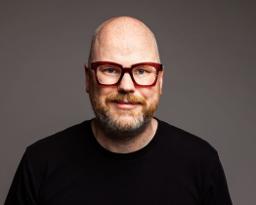
Gerry Scullion
Head of Service Design
Dublin, Ireland
Gerry Scullion is a human-centred service design practitioner based in Dublin, Ireland. He is the founder and CEO of Humana Design, trading as This is HCD, working primarily with government and public sector clients internationally, and the host of the This is HCD podcast, which has passed 1.7 million downloads across more than 140 countries. He has trained over 3,000 practitioners, and his book This is Human-Centred Design is out with BIS Publishers in February 2027.
View Directory Profile →Show Notes
In this episode of This is HCD, Gerry Scullion talks with Juan, industrial designer and co-founder of Unit 1 — the Buenos Aires-based company reinventing the bike helmet as a connected safety system. This one is personal for Gerry: as a cargo-bike dad in Dublin carrying two kids through a city in cycling transition, he bought a Unit 1 helmet, then kitted out the whole family, and then had a customer experience so good he had to get the founders on the show.
Juan shares the origin story: a lifelong skier who set out in 2017 to build the ski and snowboard helmet he wished existed — design, brand, capital raise, China supply chain, two manufactured batches sold — and then the pandemic closed every ski resort in the world. With limited funds and a seasonal product they couldn't sell, the team made the forced pivot into cycling. Investors hated it at first; Juan's co-founder had to convince him before they could convince anyone else. Six months of user research later, the problem was screaming at them: people don't wear helmets because nobody had ever designed one they actually wanted to wear.
The conversation digs into what "smart" really means — and why Juan is trying to retire the word. They unpack MIPS and rotational impact protection in plain language, the logic of putting turn signals and brake lights above the roofline of cars so riders speak the driver's language, and the mental-model shift required before motorists instinctively read a signal on a cyclist's head. Gerry raises the questions his friends actually asked: do we need a smart helmet? Are they tracking you? (No, they're not.) And what about speakers for music — how does a safety company decide which customer requests to act on?
Gerry also tells the story that sparked this episode: a 35-minute Zoom support call with Anna from Unit 1 after an app update, and the philosophy behind it — "we don't see this as a problem, we see it as an opportunity." Juan explains why the founders still hop on customer calls themselves, and how those conversations turn customers into the brand's best salespeople, one traffic-light conversation at a time.
Finally, Juan reveals what's next: after three years of quiet work, Unit 1 is the first helmet brand compatible with the Bosch e-bike system — enabling native brake lights, turn signals, crash detection through the bike's sensors, unlocking your bike with your helmet, and a helmet that switches on with the bike. The helmet and the bike, finally talking to each other — with the rider as the ultimate beneficiary.
Things we cover in this episode: Industrial design roots and the road to Unit 1; the pandemic pivot from snow sports to cycling; convincing investors under pressure; six months of user research in an unfamiliar category; helmet adoption and designing products people want to wear; MIPS and rotational impact protection explained; turn signals, brake lights, and speaking the driver's language; privacy and the limits of the word "smart"; customer support as user research; and the Bosch partnership connecting helmet to e-bike.
- Unit1 have kindly given you, the listener of This is HCD, a 10% discount ($100 minimum) HCDPODCAST-10
- Check out the website
Watch on YouTube
Transcript
[00:00:00] Gerry Scullion: This is the Faro helmet by Unit 1. It's a smart helmet that I bought about 12 months ago, and in this conversation, I speak to the chief product officer of Unit 1, and I ask the question, why does a helmet need to be smart? Now, as some of you know, I'm a cargo bike dad, and I use my bike primarily as my central mode of transport.
[00:00:27] Gerry Scullion: I use it absolutely everywhere We've probably clocked up close to 3,000 kilometers in the 18 months since we've had that bike. Now, I came across Unit 1 when I was searching for a helmet. My last helmet was at that point where it was just probably needing to be replaced, and I said, "Well, do I really need a smart helmet?"
[00:00:45] Gerry Scullion: And I asked that question to Juan, you know, why smart helmets are important. Is this something that we really should be thinking about? Now, I have three key things that I think are really, really powerful for you, the listeners of the Human [00:01:00] Centered Design Podcast. And the first, being an outsider into this space actually was, uh, a competitive advantage for Unit 1.
[00:01:08] Gerry Scullion: They had to pivot during the pandemic because originally they made ski helmets. Now, obviously, all the ski fields closed down, and they had to enter this new market pretty much with a gun to their head. How did they do it? They leaned into six months of dedicated design research, and they un- they basically heard this problem reoccurring, that people want to wear a helmet, but they want to wear a helmet that's nice.
[00:01:33] Gerry Scullion: And the beautiful thing about Unit 1 is the helmets look absolutely fantastic, they feel fantastic, and generally speaking, you know, they work fantastic as well. So we talk about that unfair and that competitor advantage. And the second thing is, if you're sharing the roads with drivers, there's a communication channel that we need to tap into.
[00:01:53] Gerry Scullion: We need to design for that ecosystem. For cars, that's, you know, blinkers and, you know, tail lights, whatever you [00:02:00] wanna call it. Indicators is probably the right word, for moving left and right. So they placed that same language system into the helmet, which is what I use, and it works fantastically.
[00:02:11] Gerry Scullion: Sometimes, obviously, people don't understand what it is because the mental model isn't there. But what Unit 1 are doing is now introducing that mental model to the drivers as it scales across the globe in the hope that drivers will start to understand that there's actually a new way of communicating from helmets to the, to the drivers.
[00:02:29] Gerry Scullion: And the third thing is, support calls are not a cost, they're an opportunity. I spoke to Anna because I had a problem with the app, and I was trying to connect my app to the, the helmet, and I was like, "Why do I need to have to connect an app to my helmet?" It actually is very, very powerful when you do it, but I was struggling with this part of it.
[00:02:48] Gerry Scullion: I became such a brand ambassador, I bought three of these helmets, two for my kids, one for my wife, and I wanted to connect them all into one, uh, into one app, and we ran through all of the options. Halfway through [00:03:00] it I said, "Anna," I'm like, "I'm so sorry for taking up your time. I know this must be costing Unit 1 a huge amount of money."
[00:03:06] Gerry Scullion: She said, "No, no, no, not at all." The way we see it is this isn't a cost, this is an opportunity. We track all of these conversations and it goes right back around to product development. Of course, this is music to our ears. Everyone in the Human Centered Design Network and the podcast are nodding ahead in approval.
[00:03:24] Gerry Scullion: It's a great conversation. I hope you're gonna enjoy it. Check out Unit One and let me know how you like it.
[00:03:40] Gerry Scullion: Juan, I'm delighted to have you on the podcast. A very warm welcome to This Is HCD. Um, maybe we'll start off, tell us a little bit about yourself, where you're from and what you do
[00:03:51] Juan Garcia Mansilla: Absolute pleasure to be here, Gerry. Thank you for having me. Um, so I'm the co-founder of Unit 1. I am [00:04:00] an industrial designer by trade.
[00:04:03] Juan Garcia Mansilla: I specialized in product design. Originally went into ID to become a car designer. I, I was, I was just, you know, decided that I was gonna be doing that, and I fell in love with product design kind of along the way. Um, I still love cars, that, that stuff doesn't- Right ... just go away. But, but- ... uh, I, I never looked back, and it was, it was, it was product for me- Yeah
[00:04:29] Juan Garcia Mansilla: at the moment I stepped out of uni.
[00:04:31] Gerry Scullion: Um, likewise, I'm an industrial designer by background as well. I know you're an industrial designer and you're, you're based in Buenos Aires. How long have you been doing Unit 1, uh, in particular, this business that we're gonna be speaking about at length today? Because it's about smart helmets, and, um, you know, I'd be interested in the story about this, this business.
[00:04:53] Juan Garcia Mansilla: Um, there's plenty to tell. Uh, I'll, I'll, I'll give you that. We started in 2017, so it's, uh, [00:05:00] soon will be 10 years. It's unbelievable how, how long- Nice ... uh, this has been. Um, although we, we started in a completely different space though. Right. Uh, in the... We started in snow sports.
[00:05:14] Gerry Scullion: Ah.
[00:05:14] Juan Garcia Mansilla: I'm, um, I'm a lifelong skier.
[00:05:16] Juan Garcia Mansilla: I've, I've always been, uh, at home in the snow. And, and, uh, n- naturally, the first product, uh, that I kind of set out to build was one that I knew a lot about. Um, and I had experienced the, the, the issues that I wanted to solve myself. So the classical, you know, you being the user for your own product puts you in that unfair advantage to- site, um, type deal.
[00:05:44] Juan Garcia Mansilla: And, um, the first product we created, the, the product we built Unit 1 around, was a ski and snowboard helmet-
[00:05:53] Gerry Scullion: Nice ...
[00:05:54] Juan Garcia Mansilla: back in 2017.
[00:05:56] Gerry Scullion: Back in 2017. And what happened with that? Like-
[00:05:58] Juan Garcia Mansilla: Well, we, [00:06:00] we, we did the whole, you know, the whole, uh, loop. Uh, we designed the product, uh, built the, started building the brand, uh, raised capital for it, built the supply chain, went to China, figured that out.
[00:06:12] Juan Garcia Mansilla: That was scary. Um, built that, manufactured a first batch, sold it, manufactured a second batch, sold it, uh, and then we were about to... You know, we so- solved a bunch of, um, issues, uh, from one iteration to the, one generation of product to the next.
[00:06:32] Gerry Scullion: Mm.
[00:06:32] Juan Garcia Mansilla: We were about to, to start scaling, uh, that production, and then the pandemic hits and- I was gonna say
[00:06:38] Juan Garcia Mansilla: every ski resort
[00:06:39] Gerry Scullion: gets closed. Coronavirus and COVID, yeah. Um, it's a nice, nice pivot because, you know, we wouldn't be here if you didn't do that pivot, 'cause I'm not a, I'm not a skier, I've never skied. Um, but what, uh, what, what drew me to Unit 1 was I'm a parent and I [00:07:00] have two beautiful children and I have a cargo bike.
[00:07:03] Gerry Scullion: Dublin, over the last decade or more, has moved massively towards a cycling culture and there's still an awful lot more work to do. But Dublin City being one of my main clients, uh, I, I get to hear about the vision of what it's gonna be like in Dublin in the next, you know, 10, 15 years in terms of a cycling culture.
[00:07:24] Gerry Scullion: And I wanted to get myself a decent helmet. Like, you know, the last one that I had I bought in Sydney, which is about 10 years ago when I lived there, and I came across these beautiful helmets. And I guess one of the first things that my brain was kind of like drawn to was like, do I need a smart helmet?
[00:07:44] Gerry Scullion: Why- Mm-hmm ... a smart helmet? Now, I guess you went through that situation as well, that question. What do you say to people, uh, in terms of like, do we need a smart helmet?
[00:07:54] Juan Garcia Mansilla: Yeah. Well, I think it, it's a, it's a fine question. I would've asked the same [00:08:00] question were, were I in your shoes, by the way.
[00:08:02] Gerry Scullion: Yeah.
[00:08:02] Juan Garcia Mansilla: Um, when we went into the space, we were- kind of thrust into it, right?
[00:08:09] Juan Garcia Mansilla: 'Cause we were thinking of, well, imagine you're free falling and you have to figure that stuff out-
[00:08:14] Gerry Scullion: Yeah ...
[00:08:14] Juan Garcia Mansilla: on the, along the way. And, um, so we, we had one product that was seasonal that we couldn't sell for the foreseeable future, which kind of thrust us into the, the cycling scene. And we were complete outsiders to this space, which in a way is a disadvantage, but it also sort of an advantage as well.
[00:08:36] Gerry Scullion: Yeah. '
[00:08:37] Juan Garcia Mansilla: Cause I got to ask that same question you are asking me now back then, and it, the answer was simple, is because there's much more to be done for keeping a rider safe than just protecting your head. There's just much more to it.
[00:08:53] Gerry Scullion: Mm.
[00:08:53] Juan Garcia Mansilla: Of course, protecting your head can save your life. Yeah. Um, and that's what [00:09:00] most helmets do, and that's fantastic.
[00:09:01] Juan Garcia Mansilla: And there's, you can do a good or so-so or great job at it. Uh, there's a gradient to that. I also learned that along the way. Um- Yeah ... and we've, we made sure to master that before anything else. We're gonna do impact protection above, uh, the cuff, um, best in class. But then the, the broader question we ask is, what else can we do?
[00:09:27] Juan Garcia Mansilla: 'Cause these people are people, cyclists. Yeah. They're not wearing helmets 'cause they think they don't need them. They're not wearing helmets 'cause they dislike the, the product. They don't wanna put a cheap plastic bucket on their heads. Um- Yeah ... there was not much done around, I mean, you're an ID. There, there was not much love put into helmets as a proper product.
[00:09:47] Juan Garcia Mansilla: Yeah. It was almost an afterthought of cycling. Yeah a little bit of a, of a lost opportunity there. Yeah. And, and we, once we open up, opened up that, that, that [00:10:00] box, then it turns out you can do all sorts of things for a rider to keep them safe beyond just protecting their head well.
[00:10:08] Gerry Scullion: Yeah.
[00:10:09] Juan Garcia Mansilla: And that's what- It-
[00:10:10] Juan Garcia Mansilla: a smart helmet can do ...
[00:10:11] Gerry Scullion: absolutely, and when you go and you buy a bike, if you're, if you're gonna get a cargo bike or an e-bike like I do, 'cause I wanna be able to travel a distance and at speed w- w- with my two kids in a safe space, I am suddenly responsible for these two lives on the back of my bike, and I'm like, "If I have a crash..."
[00:10:29] Gerry Scullion: One of the things that I was like, "Okay, that is super smart," the ability to text my wife and say, "This is the location where your husband has had an accident, um, just so you're aware." Because, you know, you've heard, you know, many times people have in accidents, and then the first time that they hear about it is when the police call them and all that kind of stuff.
[00:10:48] Gerry Scullion: It's much more- Yeah ... traumatic. So you, you're moving into spaces that are beyond, uh, just the physical product. You're moving into the e- experience side of, of design, which [00:11:00] was a huge shift, and I was like, "Actually, you know what? I'm not just buying into a, um, a product here. I'm buying into a safety system."
[00:11:08] Gerry Scullion: Um, that was- That's correct ... one of the things that, that kind of drew my attention to it. I was like, "Okay, they're thinking differently. They're, they're moving in this space that I believe is really important." So it's, it's smart to a point, um, but like not in terms of a smart home if you want, like if you're gonna use that, that word smart.
[00:11:26] Gerry Scullion: Um, so it ticked an awful lot of boxes for me. Um, but I'd, I'd like to understand a little bit more of kind of the journey you got to that point, especially if you've got investors and you're like, "Hey, look, we wanna move into these different things." What were the obstacles that you had to go around to convince people that this is what people- Ah
[00:11:46] Gerry Scullion: are gonna want and need?
[00:11:49] Juan Garcia Mansilla: Well, they, they absolutely hated the idea-
[00:11:51] Gerry Scullion: Right ...
[00:11:51] Juan Garcia Mansilla: at first.
[00:11:52] Gerry Scullion: Of course they did. Why, why would they hate that idea? 'Cause I can tell you now from a, a parent perspective that it's, that's probably the bit [00:12:00] that got me over the line.
[00:12:01] Juan Garcia Mansilla: I mean, the, I, I, I was talking about the pivot into, into cycling.
[00:12:05] Juan Garcia Mansilla: Uh- Into cycling, yeah ... you have to, you have to understand this from, from their view. They invested into a safety company for snow sports. Of course- Yeah ... cycling was, at one point had to be considered, because there's no such thing as a helmet company that only does skiing or only does cycling.
[00:12:23] Gerry Scullion: Yeah.
[00:12:24] Juan Garcia Mansilla: Um, but the, the, the change was sudden.
[00:12:28] Juan Garcia Mansilla: It was certainly forced. This was a gun to our head, not a, not a, you know, a, an, an initiative that we had from scratch. Um, Fernand, uh, our, my co-founder, he was the one that was the bravest as to really get us to do something about it. He was the one who pushed the pivot, uh, the hardest. And funnily enough, he had to convince me first.
[00:12:52] Juan Garcia Mansilla: I was the skier. I was the guy in love with the snow-
[00:12:55] Gerry Scullion: Yeah ...
[00:12:55] Juan Garcia Mansilla: that wanted to build this, had this very clear vision of we wanted to build. [00:13:00] It was all in the snow Um, so after he convinced me, uh, then we had to convince the investors, and it was more of an FYI, I, I... if I'm being absolutely- Really? ... honest. Yeah, it was, we didn't have a choice, man.
[00:13:14] Juan Garcia Mansilla: Yeah. A gun to our heads, limited, limited funds, what are you gonna do with them? Are you gonna use them to build more ski and snowboard helmets that you don't know whether or not you're gonna be able to sell them for the next two seasons? Yeah. That's a death sentence- Yeah ... for any startup. Yeah. Um, so we kind of grabbed the whatever money we had left, and we put it into the development of our first cycling, uh, helmet, and they had to play along.
[00:13:43] Juan Garcia Mansilla: They got to tag along for the ride, of course, and we kept them up to speed, but their first fear was, "Well, what's it gonna have? What's it gonna do?" Yeah. "You guys are snow, you guys are skiers. Do, do you know anything about cycling?" And I'm like, "No. [00:14:00] That's not the point. We can, we can learn about this stuff.
[00:14:03] Juan Garcia Mansilla: We can..." And we spent six months talking to users, um, understanding the, the, the, the place and the, and the use case, and the, the problems that, that, that the cyclists had to live with.
[00:14:15] Gerry Scullion: Yeah.
[00:14:15] Juan Garcia Mansilla: Um, and, and that was a, I think, a blessing in disguise because it gave us very, very clear... Like, the industry was screaming at us.
[00:14:25] Juan Garcia Mansilla: It's like, this is the problem. Yeah. People don't wear helmets 'cause they don't like them. They have a, an adoption barrier here- Yeah ... that is stupid- Absolutely ... because people- I mean- I mean-
[00:14:39] Gerry Scullion: It's, it's a visceral thing though, Juan. It's... On- once you... Like, I probably... I, I... In Ireland, you had to wear a helmet.
[00:14:47] Gerry Scullion: Not e- everyone, um, basically, uh, did it. Like, it, uh, but the police would, would say it to you if you, if they stopped you. Um, in Australia where, when I lived there, helmets weren't [00:15:00] mandatory, and I just couldn't, I couldn't believe it. I was like, "Wow." And, like, Sydney in particular was a particularly tricky city to cycle in.
[00:15:09] Gerry Scullion: So I came from that grounding that, you know, you're encouraged to wear a helmet, a helmet will save your life. Those kind of taglines were always sprayed at, at us in school. So it wasn't much of a leap for me to say, "Actually, you know what? I, I do need a helmet. I want to reaffirm those behaviors to my children by displaying the fact that I'm wearing a helmet when I'm on a bike 'cause I'd hate for them to have an accident," and-
[00:15:31] Juan Garcia Mansilla: Yeah
[00:15:31] Gerry Scullion: you know, some- sometimes it can be life-threatening. Um, and- So for me, it was really kind of like I'm, I'm walking the walk. But if I look at what's available to someone, you know, I'm 6'2" and, um, there's just not that many cool-looking helmets. And like the, the piss pot helmet, as I call it, like the skateboarders' helmets, would've been what I would've had before.
[00:15:55] Gerry Scullion: Um, you know, the kind of mod-looking helmets from the '70s, 'cause I [00:16:00] just didn't want to wear that gimpy-looking piece of plastic that looks like a, a pigeon's nest on my head. So, um-
[00:16:07] Juan Garcia Mansilla: You're gonna win a
[00:16:08] Gerry Scullion: Pulitzer. Like, there, there's a quote for you. That's,
[00:16:10] Juan Garcia Mansilla: that's fantastic.
[00:16:11] Gerry Scullion: But it's the truth. Yeah. I mean, most people care about these things now.
[00:16:15] Gerry Scullion: Like, they, they want to have something that really kind of i- is an extension of themselves, and it was very much true for me. Um, and that's, i- it's a really nice kind of bridge into where I want to ask you more about, like that whole smart connectedness with- Yeah ... with cyclists. What does that ecosystem look like from your perspective as the CEO or C- you're CPO, I think you are, in, in Unit 1?
[00:16:41] Gerry Scullion: Correct. W- what's the future like once you've got a connected device on your head?
[00:16:46] Juan Garcia Mansilla: Yeah. So once you're over the hurdle of, I, I don't wanna say solving, but- Mm ... helping with helmet adoption, and, and once we've, we've built a p- a helmet that is [00:17:00] beautiful enough and, and, and, and well-built that you actually want to wear it, we check the first box.
[00:17:06] Juan Garcia Mansilla: Yeah. That's what originally I think drew you in. It's like, this is ac- someone gave a shit about this product- Yeah ... unlike every other one I've held, so there's something different here. Yeah. Once you've done that, the second problem that was screaming at us was- They're still unsafe. There's, there's still-- this is r- this, this whole user experience of, you know, traversing the city to get to, to, to work is riddled with, with problems.
[00:17:32] Juan Garcia Mansilla: We see, we still see, um, riders getting in, on, on, in- involved in accidents, especially in the city, especially in the earlier, early hours of the morning or late hour of the night where visibility is reduced. Um, we still see drivers not seeing cyclists, especially in cities that are not well-prepared. Um, not everyone lives in Amsterdam.
[00:17:55] Juan Garcia Mansilla: Yeah. Um, for the, the rest of us mortals, we have to deal with actually [00:18:00] sharing the road with, with drivers and with cars and buses and, and scary three-ton vehicles that don't really care if you're there or not-
[00:18:08] Gerry Scullion: Yeah ...
[00:18:09] Juan Garcia Mansilla: if they even know about you being there in the first place. So the, the smart element comes to kind of bridge that gap.
[00:18:18] Juan Garcia Mansilla: We said there is much more to be done in terms of keeping the rider safe, and we're gonna use tech to do that. So we're gonna check that, that, the, the box of the t- t- the traditional version of safety, that's impact protection. Yeah. We're gonna check that box in a very serious way. Yeah. MIPS, we embrace the new certifications for higher speeds, the one that everyone, the one that everyone else is ignoring, by the way, um- But-
[00:18:43] Juan Garcia Mansilla: 'cause it's more difficult ... just on that, the
[00:18:45] Gerry Scullion: MIPS, that's a, that's a terminology, an industry terminology. Like, let, let's talk about that a little bit more, 'cause my friends are like, "Does it have MIPS?" And I'm like, "I had to go Google it." So-
[00:18:56] Juan Garcia Mansilla: It get, it gets thrown around quite a bit- Yeah ... and people don't really know what it does, right?[00:19:00]
[00:19:00] Gerry Scullion: Um, let's talk about it.
[00:19:02] Juan Garcia Mansilla: Well, M- MIPS is Multi, um, Multiple Impact Protection System
[00:19:07] Gerry Scullion: Yeah ...
[00:19:07] Juan Garcia Mansilla: uh, or Mult- Multidirection Impact Protection System. It, it, what it basically does, it's a low-friction liner that sits between the helmet and your head.
[00:19:18] Gerry Scullion: Yeah.
[00:19:18] Juan Garcia Mansilla: And what that does, it allows the helmet some degree of rotation in all directions.
[00:19:24] Juan Garcia Mansilla: Uh, 'cause you see, most impacts on your bike are not linear. You're not just hitting the pavement, you know, dead on, straight- Yeah ... like in a lab. You're probably turning and twisting, and it's mostly rotational impacts.
[00:19:38] Gerry Scullion: Yeah.
[00:19:38] Juan Garcia Mansilla: And EPS, which is the stuff in your helmet that absorbs energy, um, part of the shell, does a great job at absorbing impact.
[00:19:49] Gerry Scullion: Mm-hmm.
[00:19:50] Juan Garcia Mansilla: But it doesn't do as much as a great job when it comes to rotational energy. It's not equipped to do that that well. [00:20:00] MIPS is. MIPS is designed to absorb rotational energy. With this, this little movement that I described in the middle of a crash will take excess energy that would otherwise go into your brain and absorb that into motion, turn it into motion- Yeah
[00:20:14] Juan Garcia Mansilla: kinetic energy. Uh, and it's literally not going into your head. So it makes, uh, helmets safer.
[00:20:20] Gerry Scullion: Yeah. Absolutely. That,
[00:20:21] Juan Garcia Mansilla: that's what it does.
[00:20:23] Gerry Scullion: So it's by default Unit 1 helmets have got MIPS- Yeah ... um, across the range. Isn't that correct?
[00:20:30] Juan Garcia Mansilla: Uh, our adult helmets have MIPS. We are working on a MIPS version of our kids helmet.
[00:20:36] Juan Garcia Mansilla: The problem with that is price.
[00:20:39] Gerry Scullion: Yeah.
[00:20:39] Juan Garcia Mansilla: There's a somewhere written, I guess, there's 100 euro or 100 quid, uh, limit to what you will spend on a kid's helmet. Yeah. And MIPS would break that barrier, and there's very strong indication, at least we've gotten from, from our retail partners, that people won't, won't pay 120 bucks [00:21:00] for the MIPS- Yeah
[00:21:00] Juan Garcia Mansilla: version.
[00:21:01] Gerry Scullion: For
[00:21:01] Juan Garcia Mansilla: that. Which is a, which is- Yeah.
[00:21:03] Gerry Scullion: Absolutely ...
[00:21:03] Juan Garcia Mansilla: you know, it's, it's a bummer, but we're, we're s- I still wanna do it. It's, I think it, I think we have to.
[00:21:09] Gerry Scullion: Yeah. I, I think there's a sort of a transition between a child and an adult, like a tween kind of version. Um-
[00:21:17] Juan Garcia Mansilla: Yeah ...
[00:21:18] Gerry Scullion: in my perspective, I think I was saying to you beforehand, everyone in my house now, I was so, I, I became a- What's the word?
[00:21:26] Gerry Scullion: I'm not gonna use the I word that's used on TikTok and influencer, but I became a, like a, an ambassador, an un- uh, unmerited ambassador for the brand. Um, because this is what happens when you start sticking lights in the front and the back of your helmet, and you've got these kind of shrewd indicators that you go left and right.
[00:21:45] Gerry Scullion: People are like, "How- People stare. People stare. People stop, and they kind of go, "I like your helmet." And in Dublin, like in certain parts of Dublin, it's a bit rougher than other parts, is how I'd say it, and people [00:22:00] go, "I like your helmet." And I'm like, "I don't know if that's a threat or not." And I was like, "Yeah, thanks man."
[00:22:03] Gerry Scullion: And I have to cycle off quicker than I probably usually would. But everyone in this house has got Unit 1 helmets. Um, so as a result, you know, the kids get, um, you know, asked quite a lot, and I think that's probably one of the, the strongest ways of marketing your brand. Is, is that what you're seeing at the moment, where almost like your, your customers become y- your best salespeople?
[00:22:26] Juan Garcia Mansilla: It is 100%, uh, what's, what's happening. Yeah. We, we get, um, reports 'cause people write back, and they, they... Like, people stop me on, on... Every, every day I go out they, someone, someone stops me in a, in a traffic light and asks about my helmet. I get, I get... And this is by, by far the, the, my, my favorite type of comment.
[00:22:48] Juan Garcia Mansilla: I get drivers roll down their windows and go like, "That's awesome." Those are the, the, the... Think about the, the, the, like, the, the relationship between drivers and cyclists. [00:23:00] It's, it's kinda tricky.
[00:23:01] Gerry Scullion: Yeah.
[00:23:02] Juan Garcia Mansilla: So if you get, if you get the enemy, so to speak, to say, "Awesome, way to go. I can see you now, uh, and I can, you know, rest easy that I know where you are," or, "I know you're about to turn," or, "I know you're slowing down and I can give you that extra room," uh, coming from them, that's, it's, I wear it as a badge of honor.
[00:23:23] Juan Garcia Mansilla: That means- Yeah ... a job well done.
[00:23:25] Gerry Scullion: It's funny, on that point, like, the, the trigger for me was, like, I'm a dad, I've got two kids. I put them to bed every night with my wife. By the end of it I'm usually wrecked and I'm in front of the TV watching, watching some sort of, like, TV show, so I'm not out an awful lot.
[00:23:40] Gerry Scullion: Um, so I like to cycle. I'm not gonna brag here, but I may as well because it's the only thing of fitness that I can really get my head around. I did about three and a half thousand kilometers on the bike, uh, over the last 14 to 15 months. A lot of cycling. And, um- It is a lot ... but I found myself out, I, I went to see my [00:24:00] friend Molly and Gary Dunn, they were, they were doing this event in the city around probably July or August of last year, and I cycled in, parked the bike in a car park, had dinner, and then went to the event, and then I realized afterwards, oh, the sun is setting and I don't have any lights.
[00:24:16] Gerry Scullion: Because when I went in it's summertime, it was bright, and then I was, like, suddenly at nighttime and I felt really exposed. I was like, "Okay, I'm on the road here," and even though my bike has a few, a few little reflectors and lights, it's always at that tricky point where it's not really nighttime, uh, it's not really daytime.
[00:24:33] Gerry Scullion: That, that's
[00:24:33] Juan Garcia Mansilla: tricky.
[00:24:34] Gerry Scullion: Yeah. It's tricky
[00:24:35] Juan Garcia Mansilla: for drivers too, the, the, the kind of the twilight. Uh, it's-
[00:24:38] Gerry Scullion: Yeah, absolutely, 'cause they're like, "Is, is that a bike person in front of me?" So that's what kinda triggered me, uh, you know, to, to look for something that's an integrated thing. It's one less thing to worry about.
[00:24:48] Gerry Scullion: Like, do I have lights? I have lights now built into my bike. They were also Unit 1 as well, by the way. And, um, I, uh, that's what, what kinda got me over the line. But one [00:25:00] of the questions I wanted to ask you, and we, we discussed it about it before, they've got... It, it's, it's such an advanced, um, product that with the indicators on the back of it...
[00:25:11] Gerry Scullion: Now, I should disclose, I don't want to seem like I'm a complete nerd. I don't have these kind of pointed out indicators like, that are pointing like arrows. They're really beautifully integrated into the helmet. The s- the, the motorists, I believe, don't see those, okay? Th- because they don't have the mental model for what is happening yet.
[00:25:32] Gerry Scullion: They're not looking at a, a cyclist's helmet to say which way are they going. They're still looking at the hand gestures for that.
[00:25:39] Juan Garcia Mansilla: Mm-hmm.
[00:25:40] Gerry Scullion: What, what are the steps from a business perspective that y- you think is gonna happen next? Now, is there anything that you can do as a business to kind of encourage that mental model to evolve?
[00:25:52] Juan Garcia Mansilla: Well, we're happy to, to surf this wave, and we're, we're fully understand that there's gonna be steps to it.
[00:25:59] Gerry Scullion: [00:26:00] Yeah.
[00:26:00] Juan Garcia Mansilla: Um, for n- this is still early days. Uh, a couple of years ago, a smart helmet wasn't a thing. For, for, for a lot of people it still isn't, by the way. Yeah. This is super early days, and we're, we're trying to build a category here.
[00:26:13] Juan Garcia Mansilla: Yeah. Now, the logic is sound. If you're gonna be sharing the roads with drivers, you might as well speak their language. How do they talk to each other? They use turn signals and they use brake lights. They also honk, but we're not gonna pick that up. Um- Put it on verbal still. Yeah. Uh, and when it's dark, a hand signal is something very, very difficult to see for a driver even behind you 'cause your, your arms are not lit up.
[00:26:41] Juan Garcia Mansilla: Um- Yeah ... so step one is you build the system that would ena- will enable you to speak their language. We did that. Step two, uh, and by the way, at the, at the step we're right, we're, we're right in now, [00:27:00] I just... I'm thankful that they're seeing the rider in front of them. Mm-hmm. Uh, I'm thankful that the, the turn signal, if anything, is getting their attention 'cause it's unusual.
[00:27:12] Juan Garcia Mansilla: Yeah. You don't see... You don't have lights at that level. Th- th- these lights sit above the roofs of cars. Yeah. These lights sit above other cyclists even. Right. So it's gonna be the only light at that level. That, that in itself gives you the novelty of, "What the hell am I looking at? This is unusual."
[00:27:29] Gerry Scullion: Yeah.
[00:27:29] Juan Garcia Mansilla: Uh, which is something we want. We wanna break, you know, their attention. We wanna, wanna get it.
[00:27:34] Gerry Scullion: Yeah.
[00:27:34] Juan Garcia Mansilla: Um, and then the, the turn signal adds a layer to that. It's like, "What am I looking at? It's a blinky thing. It's going left. Is this a turn signal?" Yeah. "Is it not?" But all that process, even though they're, they're not 100% sure what they're looking at- Yeah
[00:27:51] Juan Garcia Mansilla: already gave you what you wanted, which is you have a driver behind you fully aware of your presence that [00:28:00] is kind of devising what the hell you're, you're... He s- he stopped to think. He stopped to think. Mm. To me, that is half of the job already. Yeah,
[00:28:08] Gerry Scullion: absolutely. One of the things that one of my, um... I, I told a load of people that I was speaking to Unit 1 today, 'cause a lot of people, especially around the kids' school, they see the helmet and, you know, it's, uh, got a smart thing where it's a lit- if it's a little bit dark, the lights go on, and they think that's super cool.
[00:28:28] Gerry Scullion: But one of the people say, "If it's a smart helmet, what about... Are you afraid that they're tracking you?" And this was an intrinsic response, and I said, "Look, I don't believe Unit 1 are, are tracking my, my usage, uh, and my data." And they says, "Oh, well, you know, if it's a smart helmet, they might be tracking, like, the on and offs and, like, the locations and stuff."
[00:28:51] Gerry Scullion: First of all, are you? I don't believe you are. We're
[00:28:53] Juan Garcia Mansilla: not. No,
[00:28:54] Gerry Scullion: we're not. Uh, yeah. A- and second of all, is there something about the word smart that, uh, [00:29:00] is, is somewhat of a limitation to what you could potentially do with this product? Oh,
[00:29:04] Juan Garcia Mansilla: 100%. Yeah. I, I don't, I don't... We don't like the word. We use it- Yeah ... we used it, and, uh, we're trying to wean it down.
[00:29:12] Juan Garcia Mansilla: We used it because it was the, the closest possible description that we had.
[00:29:16] Gerry Scullion: Yeah.
[00:29:17] Juan Garcia Mansilla: Um, in, in people's minds, this is a smart helmet. To me, I, I call it, uh, simply the evolution of helmets. Um, I mean, I, I think that helmets are bound to evolve this way- Mm-hmm ... to embed more and more tech and become safer because of that.
[00:29:33] Juan Garcia Mansilla: Yeah. Um, they call it smart. What, what's smart and what isn't? People call, um, anything with a, with a couple lights, uh, smart. That's not smart.
[00:29:44] Gerry Scullion: Yeah.
[00:29:45] Juan Garcia Mansilla: You duct tape a couple lights onto a helmet, that doesn't make it smart. So, uh- The connected nature of- Instead of getting into... Sorry.
[00:29:52] Gerry Scullion: It's the connected nature, I think, like, the fact that your helmet and your phone can, can communicate with each other.
[00:29:59] Gerry Scullion: That's where you start [00:30:00] moving into the, the connected smart pieces of if it does this, it does that. Um- That
[00:30:05] Juan Garcia Mansilla: is correct ...
[00:30:06] Gerry Scullion: uh, uh, uh, and I guess that's where, where my, my question is going. But just going back to that question, um, Juan, and again, I'm probably encroaching a little bit on your, your vision and your potential future products, but where do you see the, the kind of segment of, of smart helmets going?
[00:30:25] Gerry Scullion: Like, what, what's the potential there other than selling lots of products? You know, what, what other things can we do because more and more people are gonna be cycling, especially in, in modern cities as they invest into the infrastructures that, you know, people are crying out for, especially in Dublin. We want more spaces for cyclists to happen, uh, to be able to s- cycle safely.
[00:30:48] Gerry Scullion: Are, are there any more kind of things that we can see, you know, e- entering the market from your perspective of being a, kind of a, an expert in this space?
[00:30:57] Juan Garcia Mansilla: Uh, I think, I think that [00:31:00] the first thing we're gonna witness as a, you know, looking at the market, is smart helmets, I hate the term. I, I have to change it myself.
[00:31:11] Juan Garcia Mansilla: Call it
[00:31:11] Gerry Scullion: Snelmets.
[00:31:12] Juan Garcia Mansilla: Um, yeah.
[00:31:14] Gerry Scullion: Snelmets. I'm a
[00:31:14] Juan Garcia Mansilla: product expert. Uh, helmets are gonna start, um- Using more and more technology to become safer, as everything else probably is becoming safer or, or better one way or another, uh, with technology. Helmets are no exception. Think of what happened to, to bikes with, um, bi- think of bikes and e-bikes.
[00:31:36] Juan Garcia Mansilla: Yeah. I see a similar sort of evolution, um, with helmets. I think that that is already started, and there's no stopping it, and that- Mm ... that helmets can become unequivocally safer through technology.
[00:31:51] Gerry Scullion: Yeah.
[00:31:51] Juan Garcia Mansilla: Don't, don't just think lights and sensors. Of course, lights and sensors, but think materials, think impact absorption, think smart ways [00:32:00] to deflect impact, think, uh, connectivity to drivers, cities- Yeah
[00:32:05] Juan Garcia Mansilla: infrastructure, pedestrians, you name it. There's so much, there's literally not a limit to what you can do. So- Mm-hmm ... that, I think, is already happening. Yeah. Uh, and I, I'd like to think we're, are kind of leading the charge, uh, with a few other companies, uh, and incredibly proud of that.
[00:32:22] Gerry Scullion: Yeah.
[00:32:23] Juan Garcia Mansilla: The-
[00:32:23] Gerry Scullion: One of the, one of the pieces on Reddit, I don't know if you're a big Reddit user.
[00:32:27] Gerry Scullion: I am. And in, uh, my research for this, I, I, you know, found a couple of pieces on Reddit, I believe, saying, "The Unit 1 helmet would be perfect if it included, uh, speakers for me to listen to my music on the go." And this is what I, I would refer to as, like, it's a balanced decision. Like, you know, y- you're promoting safety, and then you're also kind of, like, trying to, you know, introduce a, a need that people want, to be able to listen to music when they're cycling.
[00:32:57] Gerry Scullion: So- Yeah ... I, I looked around over the [00:33:00] last week, 'cause I knew we were gonna be speaking this week, and I think I'd probably say about 20% of people, myself included, have Shokz, um, you know, the bone conducting- Yeah ... uh, kind of headphones in, so I can still hear. I've got all my peripheral, you know, kind of, uh, sound a- all around me, but I can still listen to music at a very, very low volume.
[00:33:19] Gerry Scullion: Can you walk me through, now I'm not saying you are doing that, I'd have no idea, but if that was a conversation where there was an integration gonna happen, how do you balance that from a CPO perspective? You're a chief product officer. H- how do you... Is that something that would be discussed, um, or is it just a given, like, oh, the, the customers are asking for it, we must give it?
[00:33:40] Gerry Scullion: Uh, no. How do you navigate those kind of decisions? It's,
[00:33:43] Juan Garcia Mansilla: it's, it's not as simple as that. Um, we're, we're not, we're not gonna blindly follow, uh, uh, a trend or a bunch of people-
[00:33:52] Gerry Scullion: Yeah ...
[00:33:53] Juan Garcia Mansilla: asking for something. Uh, w- w- w- we listen to everything, and I'm, I'm, I'm talking to [00:34:00] customers daily. I sneak into the Instagram account, and I'll, I'll reply to comments.
[00:34:05] Juan Garcia Mansilla: I'll, I'll speak to, to... I'll, I'll respond to DMs, 'cause I love it. I, I love to, you know, not lose sight of that.
[00:34:12] Gerry Scullion: Yeah.
[00:34:14] Juan Garcia Mansilla: But I think our duty as a, as a, as a safety company is to always put, put that safety first. Yeah. So we're, we have to first figure out if this is something worth doing. I know people might want it.
[00:34:28] Juan Garcia Mansilla: People can ask for whatever they want, but whether or not we should respond, that's an entirely different story. Yeah. So going to your question, um, music is tricky. Is, is, is... it's not really safety, right? To, to- Yeah ... it's not really the safest thing to listen to music while you're riding. But if you're- Yeah
[00:34:49] Juan Garcia Mansilla: gonna do it, it might as well be in a way that is safe, as safe as it can get. Yeah. It might as way, it might as well be in a way that preserves [00:35:00] your peripheral, let's say, awareness. Mm-hmm. Um, and that's certainly something that we can do. Um, but d- it doesn't even stop there. Think about- The uses you can get out of non-obtrusive audio-
[00:35:18] Gerry Scullion: Absolutely
[00:35:18] Juan Garcia Mansilla: you can-
[00:35:18] Gerry Scullion: Phone calls and-
[00:35:20] Juan Garcia Mansilla: Turn-by-turn directions, uh, not looking down to your phone or taking it out of your pocket every- Mm-hmm ... every traffic light to figure out where, where the hell you are.
[00:35:29] Gerry Scullion: True.
[00:35:29] Juan Garcia Mansilla: Um, phone calls, work calls, uh, people take from their bike. Um, this is, this is a thing. This is a proper use case that is definitely worth looking into, and, and we are.
[00:35:41] Gerry Scullion: Yeah, absolutely. Now, because I said I'm gonna take an hour of your time, and I'm- I'm aware, like, we're- we're getting close to that time, and I like to keep to that time, w- the reason why we're here, okay, is not because I bought a helmet and I emailed kind of going, "Hey, I have a podcast. I wanna interview you."
[00:35:59] Gerry Scullion: There was [00:36:00] something that I would refer to as a kind of special moment, okay? You updated your app, which I already thought was brilliant, okay? And the app became from brilliant into even more brilliant. Thank you. But I received an email saying, "If you've got any problems with your upgrade, schedule a time with somebody to speak to, uh, s- and they'll come and help you."
[00:36:21] Gerry Scullion: Now, me being a service designer, I kind of wanted to hack that, okay? I w- I was like, "Yeah, let's, let's see. Let's see." Now, I did have a problem with the upgrade of, you know, kind of the helmet and all that kind of stuff. And surprise, surprise, I was, like, expecting it to not be available in my time zone, but there was somebody available in my time zone, and there was somebody available a couple of days out called Anna, who was remarkable, and we sat down.
[00:36:46] Gerry Scullion: She goes, "All right. What's, what's going on?" We had a Zoom call, and I said, "Okay, I'm having problems connecting this to this," and, you know, it was an opportunity for both of us to speak. And they said, "Oh, what do you do?" They noticed that I've got a lot of microphones and stuff. [00:37:00] I mentioned the podcast, but we spent probably about 35 minutes, okay?
[00:37:06] Gerry Scullion: And I said, "I need to ask you, how can you afford to spend 35 minutes on your customers when they've got a problem?" And Anna's response was, "Well, this, we don't see this as a problem, we see this as an opportunity." And I wrote that down and you, you can be like, oh, good work, Anna, good work, because Anna- I will,
[00:37:26] Juan Garcia Mansilla: right after this
[00:37:27] Gerry Scullion: But I loved that and I spoke about it to, to a couple of my, my service designing friends, and they're like, "Wow, that is really insane."
[00:37:35] Gerry Scullion: They said, "Look, we wanted to make sure that you could get your helmet back on the road as quickly as possible, and also we now know that there was a problem with this. We'll track it down and we know we can try and see if other people have got it and we can try and fix them as well." So it was a continuous learning, and that to me is one of the foundational pieces for a strong human-centered design company.
[00:37:54] Gerry Scullion: Can you talk to me a little bit more around the decision, like, 'cause y- you're weighing that up there saying, 'Actually, you know what? We'll, we'll offer a [00:38:00] Zoom call to our customers.' Most people would be just be pushing them to an FAQ page and maybe a YouTube video at best, but never a Zoom call where it's 30 minutes long each
[00:38:15] Juan Garcia Mansilla: Well, I like that you went through the, the, the motions, and I like that you...
[00:38:21] Juan Garcia Mansilla: Well, Anna's great. I like, I like that you met her and you talked to her. Uh, she's brilliant. Uh, and- Yeah ... and, and I, I've hi- I've hopped on th- on many of these calls myself as well. Um, the reason why we do it is we're st- we're, we're at the building stage. This is early days for the category, but, uh, it's, it's also early days for us.
[00:38:42] Juan Garcia Mansilla: Hmm. It's a privilege to get half an hour on the phone with you, wherever you are, and understand what's going on, understand what you wanna use the product for, what, what are you failing to do, um, that we can help you with. And there's a [00:39:00] reason that most of our customers become this secret, you know, ambassadors to the brand, and it's because we've established a, a, a real connection between them just because of the fact that we've talked to them, or we replied to a comment, or, uh, or we sh- we showed up to a call, or we, or we spent 45, 45 minutes with a, with an early- elderly person, um, helping them pair, uh, three Bluetooth devices to each other, which is no, no easy feat- Yeah
[00:39:32] Juan Garcia Mansilla: uh, sometimes. So the fact that we... The reason we still do it is because the amount of insight we get from those calls, the relationships we build with, with, with those people, that then, in turn, they go or they turn around, and they kind of mirror that with their family, and their friends, and their colleagues.
[00:39:53] Juan Garcia Mansilla: Yeah. That is infectious in the best possible sense of the word. Yeah. It is infectious. It p- [00:40:00] spreads outwards. So every one of these calls, like the one you had, then transforms into this little pinpoint of a spot, in your case, in Ireland, that will start spreading outwards in, in the best possible way.
[00:40:16] Juan Garcia Mansilla: People will- Okay ... stop you in your tracks. You'll have good things to say about it, about us. Yeah. People ask about your helmet. You'll take it off, and you'll do the explaining 'cause you, 'cause you like it, 'cause you like the people behind it, and 'cause there's, 'cause there's a, there's a human behind it that, that you've, you've met, you've talked to.
[00:40:36] Gerry Scullion: And that, and that is like one of the most powerful things. Like, it's, it's a great example of the benefit of mixing what we refer to as user research or customer research, and blending it together to become ambassadors. Now, well, we're at the end of the episode, so is there anything else that you want us to cover off, or anything else you wanna give a shout-out to, anything maybe that's coming up for Unit 1?[00:41:00]
[00:41:00] Juan Garcia Mansilla: Uh, uh, yeah. I mean, uh, without-- We're at a very, we're at a very exciting kind of, uh, position where, uh, the, the products are doing fantastic. Uh, sales are going up, uh, across the globe. We're really happy with the way that we were, we were received by the market. Um, just a, a month ago it was, it was announced, um, something that I've been personally working on over the past three years, um, was, was quietly announced, and we're about to do the whole, you know, announcement ourselves.
[00:41:39] Juan Garcia Mansilla: Um, we're, we started to work with Bosch. Ah, good. Bosch is a, a big, big, big player in the, in the cycling industry. They do the m- motors and the systems- Wonderful ... for virtually every e-bike out there, um, a lot of them. And the reason we got into that in the first place was, and [00:42:00] you're gonna love this from a human design kind of approach perspective, um, what we're trying to do here is- We need to work with the bike.
[00:42:11] Juan Garcia Mansilla: If we don't work with the bike, then it's a missed opportunity. Bikes are smart, helmets are smart, might as well connect them, and then they're, they can share on their smartness. They can do stuff for each other, and the ultimate beneficiary is always gonna be the rider. Mm. We, we tried this very wacky, crazy formula, uh, three years ago.
[00:42:31] Juan Garcia Mansilla: For the first time ever, we connected to a bike. We connected a helmet to a bike like you would connect AirPods to your phone.
[00:42:37] Gerry Scullion: Yeah.
[00:42:38] Juan Garcia Mansilla: Sounds simple enough, but it had never been done, uh, until we, we came along. So we did that, and we explored that connection, and it turns out it's, it's amazing. You can do a lot of crazy stuff, but for the most part it can make the ride safer, more connected.
[00:42:55] Juan Garcia Mansilla: Yeah. And we kind of embraced that and said, "All right. How do we do it with everyone?" [00:43:00] Uh, and it turns out, well, you can't, 'cause most bikes use the Bosch system. They don't have full control of their, their own brains, let's say. So we went to the brains and we said, "Bosch, we wanna do, we wanna make this happen."
[00:43:13] Juan Garcia Mansilla: And Bosch, of course, is gigantic. Exactly. It took us three years to, to, to get it. Um, but we're finally there. We're the first helmet brand that is compatible with the Bosch system. Mm. This is happening in a month it's being released.
[00:43:28] Gerry Scullion: Um- So what, what will it enable you to do then once you're connected with, if you want, the brains?
[00:43:34] Juan Garcia Mansilla: That's, that's it. It's an, it's a never-ending e- evolution, uh, that we can upgrade over time. But think, uh, native brake lights. Yeah. Um, you can, you can unlock the, the bike with your, with your helmet. You can- Yeah ... there's no such thing as turning the helmet on and off, uh, anymore. You just turn on the bike, and the bike will, the helmet- Totally
[00:43:54] Juan Garcia Mansilla: will follow, follow suit. Um, think native turn signals. [00:44:00] Um- Yeah ... we have crash alert. We have sensors. The ba- the, the bike can piggyback off those sensors. We can let the bike know you've crashed in a much, much more reliable way than the bike's- Yeah ... crash's, crash sensors. Wow, great. So we can build something together.
[00:44:14] Juan Garcia Mansilla: Um, et cetera, et cetera. Um- Yeah ...
[00:44:18] Gerry Scullion: think about the- There's a load of value when you say it out loud. There's a load of value. Exactly. So, so watch this space, is what you're saying, for, for Unit 1. And look-
[00:44:25] Juan Garcia Mansilla: Yes ...
[00:44:26] Gerry Scullion: I'm gonna put a link to, um, Unit 1 in the show notes for anyone who's interested. Like, the, the link is, is in the show notes.
[00:44:32] Gerry Scullion: We're, we're discussing, like, if there's a potential, you know, kind of a discount code or something like that. If there is and we have it in time, we'll drop it into the show notes as well, folks. But also remember there's lots of other exclusive discount codes if you just go to thisissatecity.com, um, put in your email address, you'll get into the partner's dashboard, and you get access to some, uh, other discounts as well.
[00:44:54] Gerry Scullion: We'd love to include Unit 1 in there and promote you 'cause I, I truly believe in what you're [00:45:00] building here. It's no longer just, as you're saying, like, a helmet. It's a whole safety ecosystem, so kudos to you, your two other co-founders, and of course to my, uh... I'm the number one fan for Anna, who, um, is a remarkable, um, ambassador for your own brand.
[00:45:16] Gerry Scullion: So a big shout-out to Anna for setting this up, and Sophia as well. Thanks so much for your time, Wout.
[00:45:21] Juan Garcia Mansilla: Absolutely. Thank you for having me. I enjoyed it.
Subscribe to the Podcast
Rate & Review
If you enjoy the show, please leave a rating. It helps others find it.
Discussion
Sign in to join the discussion
Sign In