A plain-English guide
What is Human Centered Design?
Human Centered Design is a way of making services, products and systems that starts with the people who use them, and keeps them involved the whole way through.
It is less about tools and more about how you think. Listen before you decide. Design with people, not for them. Keep checking that it works in real life, for real people, on their worst day as well as their best.
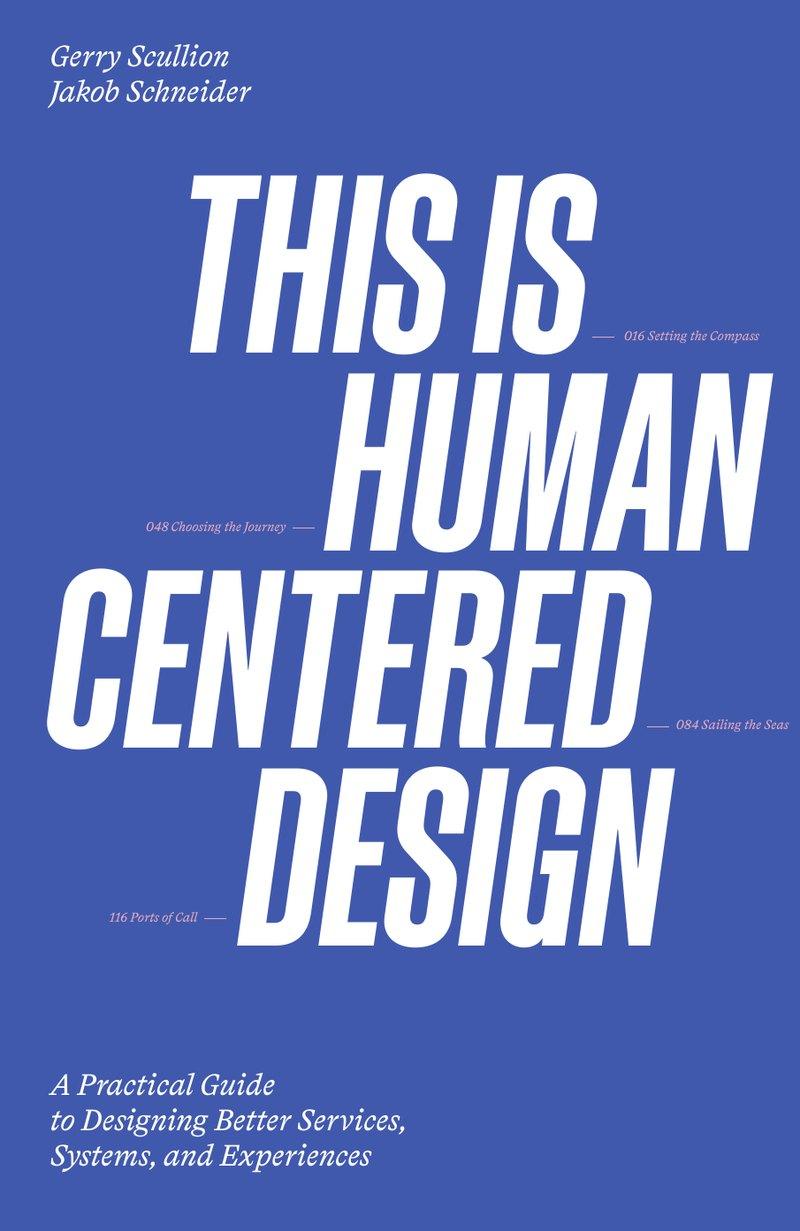
By Gerry Scullion Adapted from This is Human Centered Design (BIS Publishers, 2027) 8 min read
The short version
Human Centered Design (HCD) means understanding people's real lives first, designing with them rather than for them, and judging success by how well the result works for people, not just how fast or cheap it was to make.
- Start with people, not assumptions.
- Look at the whole system, not just the screen or the form.
- Try small things, learn, and keep going.
The name is confusing. Here is what it really means.
When I first heard the phrase “Human Centered Design” as a design student, I thought: put the human at the centre? The centre of what, exactly? I nodded along in lectures, but I didn't really get it.
It took me years to understand. It is not about where you put the person on a diagram. It is about how you orient yourself around them: what you notice, who you listen to, and who you check with before you decide.
“Services are delivered whether they are designed or not.”
As a newborn, I was rushed to hospital in Dublin with a heart condition. A nurse heard my cry and acted. A doctor who recognised my surname took a special interest in me. Nobody designed that chain of care. People made it work. Human Centered Design is about building services where that kind of care doesn't depend on luck.
A simple example
In Ireland, the only way to find out if you could get social housing was to phone a line that was open during office hours.
One person I met worked in a crèche. Their 30-minute lunch break was too noisy to make a call. By the time they found somewhere quiet, the phone line had closed for its own lunch.
Anyone could phone. That is not the same as everyone being able to.
A human centered team spots this by talking to people like them, early. Then they fix it, for example with a simple online checker people can use at any time.
Equal on paper is not the same as fair in real life.
What it is, and what it isn't
It is
- Listening to people before deciding what to build
- Designing with the people affected, not just for them
- Caring how people feel, not only what they need to do
- Looking at the whole system around a problem
- Trying small things early and learning from them
- Something anyone can practise, whatever their job title
It isn't
- Making things look nicer
- A workshop full of sticky notes
- A fixed, step-by-step process
- Something only designers do
- About moving faster
- A one-off project you finish
The ten principles
In the book, I set out ten principles. Think of them as a compass, not a checklist. You don't complete them. You keep coming back to them.
In real life
Before a meeting, notice what you are bringing into the room: your mood, your assumptions, your energy.
In real life
In Australia, court letters went out in English to people who couldn't read English. Their children had to read and explain them.
In real life
Walk through your service as if you were having your worst day: grieving, exhausted, afraid. Does it still feel respectful?
In real life
A financial company made its application form simpler. It tested well, then the back office was flooded with incomplete forms, calls and emails.
In real life
Hold a weekly session where the team works together on something unfinished. No slides, no polish.
In real life
When I was stuck on a project, I told the room and handed the problem back to them. That is when the work finally moved.
In real life
Map a bakery and you find the baker and the customer. Look one layer further and you find the farmer, the seed supplier and the fuel supplier too.
In real life
Someone makes a mistake on a confusing benefits form. The system makes them start again, and nobody asks whether the form was the problem.
In real life
Put the work up on the wall so everyone sees the same picture. As Russell Davies says: show the thing.
In real life
Researchers in Japan followed a man into a shop and found a service that stored and cared for people's shoes, because apartments are so small. No survey would have found that.
Each principle has its own chapter in the book, with stories, exercises and questions to reflect on.
About the bookHow it works day to day
There is no single correct process. But most good HCD work moves around a loop like this.
- 01
Understand
Spend time with the people who use the service, and the people who run it. Listen more than you talk.
- 02
Make sense
Look for patterns. Find where people struggle and what is causing it underneath.
- 03
Try
Make a rough version early: a sketch, a script, a paper form. Something people can react to.
- 04
Learn
See what happens. Keep what works, drop what doesn't, and go round again.
It's a loop, not a line. You'll go round it many times.
You don't need “designer” in your job title
Everyone who shapes a service is designing it, whether they know it or not. The policy maker who wrote the rule. The manager who signed off the budget. The developer who built the form. The person on the phone who decided to be kind.
Questions people ask
They overlap. Design thinking is usually taught as a process with stages. HCD is broader. It is a mindset and a set of principles you bring to any process, including how you treat people and the wider system around them.
They are close relatives. UX design often focuses on one product or screen. Service design looks at the whole service, including the parts customers never see. HCD is the set of values underneath both.
No. Policy makers, managers, developers and frontline staff all shape services. HCD is for anyone who wants those services to work better for people.
It can feel slower at the start. But fixing a service after it has failed is far slower and more expensive. Working with people from the start is richer, more human, and more likely to last.
Pick one service you work on. Talk to three people who use it. Ask fewer questions, leave more space, and listen for what surprises you. That is Human Centered Design.
Keep going
The Design Compass
One useful idea every week, in plain English. Join 3,000+ readers.
The book
This is Human Centered Design. Out February 2027 from BIS Publishers.
The podcast
This is HCD. Conversations with the people doing this work. 1.7 million downloads in 140+ countries.
The community
Learn alongside other practitioners.