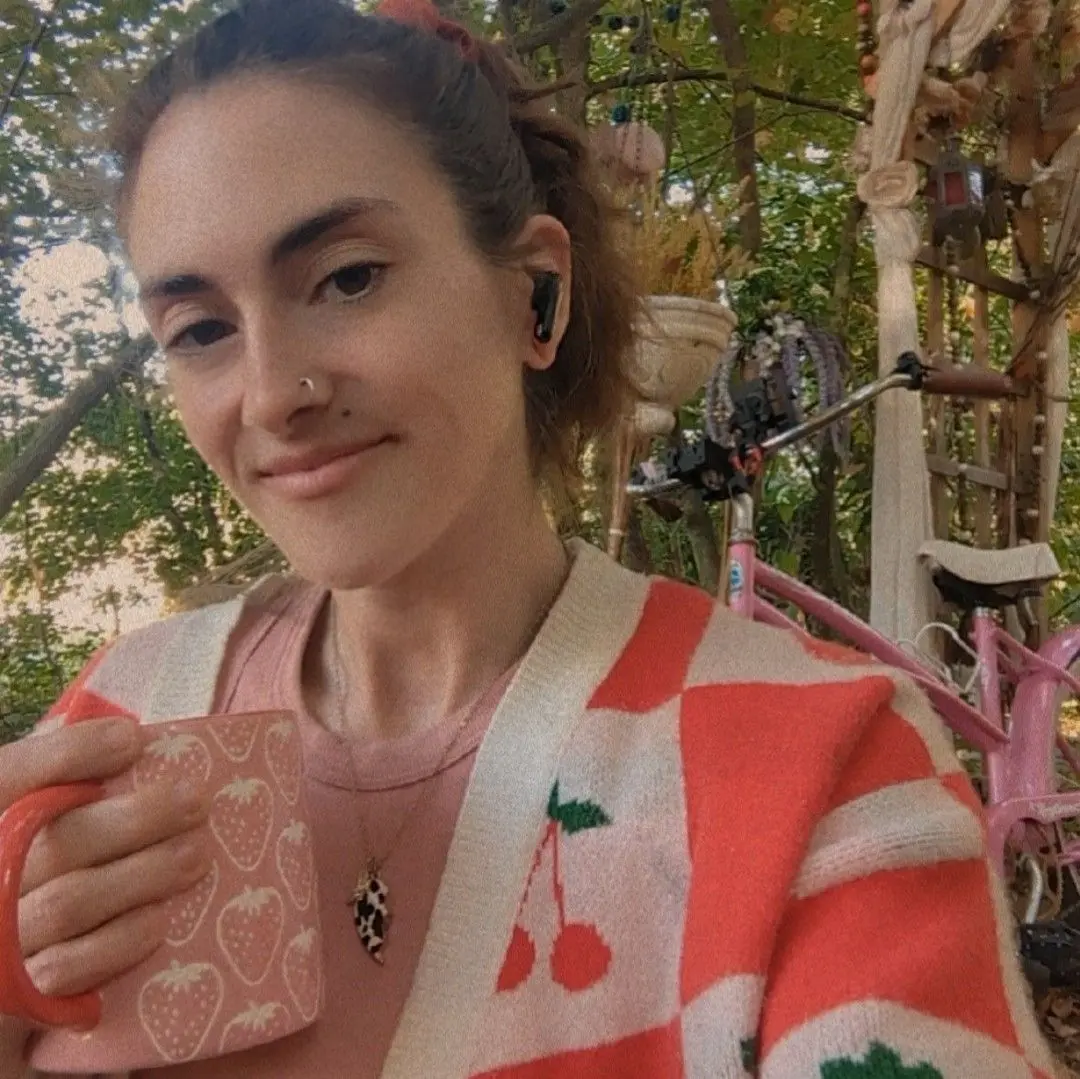
Kathrine Force
I am an AuDHD civil-social engineer with 15+ years of experience designing human-centered systems, mutual aid networks, and low-cost social infrastructures that strengthen community resilience. Communities already possess the capacity to self-organize, care for one another, and distribute responsibility, so long as they are given social environments that make those behaviors intuitive.
About
Much of what I do involves making the invisible architecture of cooperation visible, and then shaping it into forms that allow people to participate naturally, without needing specialized knowledge, and avoiding the need for large budgets and rigid institutional oversight.
I study and design the social architectures that come from lots of small, independent contributions converging into shared outcomes. This work comes from the theory of advergent mutualism, a cooperative pattern in which collective impact does not depend on hierarchical planning, centralized management, or linear workflows. Instead, it arises from interconnected, semi-autonomous actions like adaptive behaviors that respond to local needs. This also provides for distributed leadership that allows responsibility to migrate easily to where it is most effective. This approach recognizes that most real social systems behave less like machines and more like living ecosystems that are shaped continuously by the people who participate in them. It recognizes that real, nonlinear social systems are diverse and context-dependent.
Advergent mutualism also incorporates a neurodivergent lens on system design. Many traditional social structures unintentionally create cognitive barriers by assuming a narrow range of processing styles and communication patterns. I design parallel systems that account for a broader range of cognitive experiences, including autistic pattern-recognition strengths, ADHD parallel-tasking tendencies, nonlinear reasoning, and alternative pacing. When systems are designed with this wider spectrum in mind from the beginning, they become more intuitive not only for neurodivergent participants but for everybody. It addresses systemic inclusion as a design principle instead of keeping accommodation as an afterthought.
My practice revolves around translating conceptual theory into practical tools that communities can begin using immediately. A system is successful when a person who has never encountered it before can intuit the next step without needing any extensive instructions. I develop decision pathways that reduce cognitive load and clarify options at the moment they are needed, and feedback structures that allow people to contribute in short bursts of time without having to maintain constant engagement. I also create frameworks capable of remaining stable even when participation fluctuates. Community systems must remain functional even through normal, natural shifts in participation.
A large portion of my work involves collaborating directly with communities. Instead of imposing a predetermined structure, I help communities articulate the forms of care, cooperation, and shared work they are already doing, and then I build or refine systems that enhance those natural patterns. The aim is to engineer social environments that are inclusive, flexible, and durable, yet still lightweight enough to thrive without heavy funding or formal institutional control. Systems built this way are more likely to be sustained over time because they rely on distributed participation rather than single points of failure.
Accessibility, autonomy, and collective empowerment are required in everything I design. When systems are accessible, the participation requires less energy. When systems support autonomy, people are able to feel ownership and agency. When they are collectively empowering, the benefits compound as more people join in and contribute. This guides the design of networks of care, shared resource models, and collaborative problem-solving structures. What makes these systems inherently sustainable is that they align with the way people behave when barriers are low and trust is high. They focus on strengthening community relationships, communication, and reciprocity rather than building dependence on external resources.
I focus on processes that generate resilience through responsiveness rather than rigidity. Traditional systems often rely on protocols, rules, and fixed hierarchies. These systems function well when the environment is predictable but can often struggle in complex or fluctuating conditions. Advergent systems, by contrast, grow horizontally through relationships and micro-interactions. They adapt in real time, allowing for the redistribution of responsibilities organically. This flexibility allows communities to respond to challenges with creativity and shared problem-solving rather than bottlenecking around authority or funding.
This approach is rooted in a decade and a half of applied design, experimentation, iteration, and direct collaboration with groups across many contexts. I have worked on systems for neighborhood mutual aid, rural community support, accessible resource-sharing networks, and inclusive decision-making structures. What unites these projects is the understanding that social infrastructure does not have to be expensive, complicated, or bureaucratic in order to be transformative. Often, the most impactful systems are the ones that emerge from strengthening and structuring the informal networks that people already rely on.
My continuing work through my organization, Advergent Dynamics, focuses on formalizing and advancing civil-social engineering as a distinct discipline. While fields such as social work, community development, and systemic design overlap with aspects of this work, civil-social engineering emphasizes a specific blend of systems theory, cognitive accessibility, mutual aid principles, and emergent social dynamics. It seeks to articulate the mechanics of community behavior in ways that can be intentionally designed, improved, and replicated without losing the organic qualities that make them resilient.
A key part of this effort involves developing language, tools, and conceptual models that help people see and understand the invisible structures that govern their everyday interactions. When communities recognize the patterns that already hold them together, they can intentionally strengthen them, and when organizations understand the emergent properties of cooperative systems, they can design programs that support those properties rather than unintentionally suppressing them. If designers adopt an advergent framework, they can create systems that grow with their communities rather than constraining them.
I continue to expand frameworks that honor lived experience and support neurodivergent inclusion. Many of the most effective community systems emerge from people who think outside conventional structures or who have navigated environments that were not built with them in mind. Supporting these perspectives strengthens the ecosystem as a whole. I want to make collective care intuitive, natural, and accessible for everybody through structures that invite participation and honor diverse ways of thinking and relating instead of relying on top-down direction.
Civil-social engineering is the engineering of trust, relationship, and reciprocal care. It is the ongoing work of understanding how people connect, cooperate, and sustain one another, and then building systems that help those connections flourish. It is a framework for designing communities that can adapt, support themselves, and grow through shared strength rather than scarcity, and a commitment to shaping social ecosystems that are as dynamic, diverse, and interconnected as the people who build them together.
Discussions
Kathrine's Top People
No connections added yet